Friday, October 15, 2010

Single Ox Pulling Cart

Scout the Ox Reflects on the Changing Seasons
I wonder if my Carul cu Boi would bring EUR 155,000 ($208,109.90 US).  Would you like to make an offer? (See Monday's post below.)

Posted by Picasa

Thursday, October 14, 2010

Family with Ox --- Butter Sculpture

 
Family with Ox
Designed by Marie Pelton, this ox was sculpted from 600# of donated butter by her and her husband Jim Victor. It was finished for display in a refrigerated room at the 2010 Eastern States Exposition, West Springfield, MA

Posted by Picasa

Monday, October 11, 2010

Top Price Paid for 'Ox Cart'

 
Carul cu Boi
A late nineteenth century Romanian painter’s artwork sold recently in Bucharest, Romania, for EUR 155,000 ($208,109.90 US). Not bad for an ox cart! That makes it one of the top priced artworks ever sold in Romania. The painter's name was Nicolae Grigorescu (1838-1907). The title of the painting was Carul cu Boi, or the Ox Cart.
Posted by Picasa

Oxen helped build this country

Oxen helped build this country
I think every village green should have a statue of an ox. He is one of nature’s finest, most useful and virtuous creatures, and he helped build America. . . .

“Oxen were slow (about 2 miles per hour), but when there was a need to overcome inertia, they pulled with a resolute and steady strength until things started to move again,” retired farmer Michael Williams wrote in Farmers Weekly. . .

Click on title to read more of KEVIN CULLEN at Commercial-News .

Friday, October 8, 2010

How One Team of Oxen Helped Save the Buffalo from Extinction

An American Indian legend tells us that many, many years ago the Oceti-Shakowin had come together into a large camp. There were no wild game and the people were starving.
Then she came to them. Her name was White Buffalo Calf Women, a young woman more beautiful than any they had ever seen; she was dressed in a gleaming-white, leather dress. She brought a precious bundle as a gift — and taught them many things. Before turning to leave she said she would be back. As she was walking away, she turned into a white buffalo calf. Soon after, great herds of buffalo appeared on the horizon providing the Oceti-Shakowin with meat for food, sinews for bowstrings, skins for clothing --- and tepees, and bones for many tools. Thereafter, white buffalo calves became sacred to the American Indian.
   Ernest Harold Haynes Driving his Team of Buffalo Oxen:
shown here in harness though they were trained to a yoke. 
Around the turn of the century (1900), naturalist, Ernest Harold Baynes watched a small herd of buffalo stampede up a hill in the Blue Mountain Game Preserve near Croydon, New Hampshire. He was duly impressed with the energy, vitality, and strength of these beasts.
The herd was known as the Corbin Herd after Austin Corbin who had imported some buffalo to his elite private hunting preserve in 1888. Corbin was a wealthy railroad executive who had operated the profitable Long Island Railroad in New York. While at the hunting preserve on June 4, 1896 Corbin was killed. It is believed his coachman’s horses, who were without their usual blinders, spooked at the opening of his umbrella. He was thrown against a stone wall when the carriage upset.
 
Corbin Herd, Blue Mountain Game Preserve, Croydon, New Hampshire
Corbin was gone, but his hunting preserve continued. Around 1904, Baynes had becom acquainted with Austin Corbin [Jr.] which led to he and his wife living in the park at the Haven Cottage. By 1905 there were 150 buffalo in the park and it was during this time that Baynes witnessed the energy, vitality and strength of the buffalo, he wrote, in the olden days [the buffalo’s] meat meant food for the Indians, but we can get along with other foods; his hide meant tepee covering, where wood and stone mean ours; his fur was fashioned into clothing, while we depend on cloths; his bones made implements which now must be silver and steel; his sinews were strung through bows, but our sportsman demand bullets. No; if the buffalo were to survive, it must not be by any artificial preservation, but by fitting themselves into the plans of men. With these words Baynes set out to domesticate the buffalo for use as a draft animal — to harness their energy, vitality and strength --- as oxen.

A Stylish Man Wearing a Buffalo Robe
Vintage Postcard, 1910
Prior to the nineteenth century the buffalo were described as numbered “numberless." They made the vast prairies of America undulate with motion. Estimates range from thirty to sixty million head.

The buffalo’s demise (actually bison, but whoever heard of a bison-nickle) began with firearms and the introduction of horses to the plains Indians in the 1700's. It was  hastened in the 1800's by the industrialization of the tanning process, by inroads made into the west with carts, steamboats, and railroads, and by the popularity of buffalo-hide coats in Europe. A robust trade ensued.

Most of the buffalo slaughter took place between 1830 and 1860. Undoubtedly, politics and the problem of the American Indian played a part.
Buffalo Butcher, Batoche National Historic Site --- Diorama

I would not seriously regret the total disappearance of the buffalo from our western prairies, wrote Columbus Delano, Secretary of the Interior in 1873, as a means of hastening [the Indian’s] dependence upon the products of the soil and their own labors.

Another man, by the name of General Phil Sheridan, went before the Texas State Legislature in 1876, apparently opposed to the legislature’s johnny-come-lately efforts to protect the buffalo. Every hunter should be given a medal with a dead buffalo on one side and a discouraged Indian on the other, he said, once the animals are exterminated the Indians will be controlled and civilization can advance.
(continued below)
 
Posted by Picasa
(continued from above post)
 
Buffalo Nickel Minted from 1913 to 1938
In 1886 the Smithsonian Institute sent an exhibition out to collect specimens for the U.S. National Museum. After a lengthy search twenty-five head were killed in Montana. The following year The American Museum of Natural History, perhaps not wanting to be one-upped by the Smithsonian, sent out their own expedition in search of buffalo. After searching for three months they found none!
According to William T. Hornaday, Chief Taxidermist of the National Museum, there were 85 free ranging buffalo left in 1889, 200 in the federal herd at Yellowstone National Park, 550 at Great Slave Lake in Canada, and 256 in zoos and private herds.

Poachers shot two bulls, a cow, and a calf near Lost Park, Colorado in 1897. These were the last known wild buffalo in America.


Forty Thousand Buffalo Hides in the Corral of Wright & Rath, Dodge City, Kansas
The naturalist, Baynes, captured several buffalo calves from the Corbin Herd. He selected two of them to train as oxen. He named them Tomahawk and War Whoop. In reading his book by the same name anyone who has trained calves to the yoke can appreciate his experiences. ( War Whoop And Tomahawk: The Story Of Two Buffalo Calves) After a series of mishaps he did achieve some success. He began showing the ox team at county fairs and at larger expositions. He didn’t stop there. He wrote numerous letters and over forty magazine and newspaper articles concerning the plight of the buffalo. He gave exhibitions of buffalo robes and artifacts, and free lectures. One letter got the attention of President Theodore Roosevelt. I am much impressed by your letter, Roosevelt wrote back, and I agree with everything you say.
Baynes then founded the American Bison Society. William T. Hornaday from the National Museum became the society’s president, and Teddy Roosevelt its honorary president. Of his team of buffalo-oxen Baynes wrote, They raised so much enthusiasm that the money collected put the Society on its feet. They had shown not only what they could do but what every buffalo could do, and if there is ever a contest of the strength of the buffalo and the [domestic] ox, weight for weight, I think I know what the result will be.

 
Crated Buffalo Moving West by Wagon Train
In just three years the first federal buffalo range was established (on land previously designated as Indian reservation). Another federal buffalo range was begun in Montana. Buffalo were shipped west from captive herds in the eastern states. Wind Cave National Park in South Dakota got fourteen head of buffalo from the New York Zoo in 1913.

A buffalo count in 1929 estimated there were 3,385 head in the country. The American Bison Society felt their goal had been accomplished and a year later they voted to disband.

War Whoop and Tomahawk were quietly returned to the Corbin Herd at two-and-a-half years of age. It is believed that with their increased  size and strength they had become impossible to handle. The job they had done was a more important one than proving their worthiness as oxen. They had helped raise awareness of the plight of their species

A few white buffalo calves have been born over the years, causing no small stir amongst Native American tribes. But the numberless-numbers of brown buffalo, undulating across the western landscape, appear to be gone forever. Gone too, are the sustenance and lifestyle of the hunters who once hunted them. But thanks in part to War Whoop and Tomahawk, the population of buffalo is currently being managed at a sustainable level of about 500,000 --- allowing for the harvest of lean, healthy, buffalo meat.

The Time of the Buffalo


Posted by Picasa

Sprayed by a Skunk

How to remove the bad-smelling, odor of the skunk? The remedy is NOT contained in this old verse; it's actually much easier.


Bury, or wash, or rub as you will,
The scent of the skunk will cling to you still.
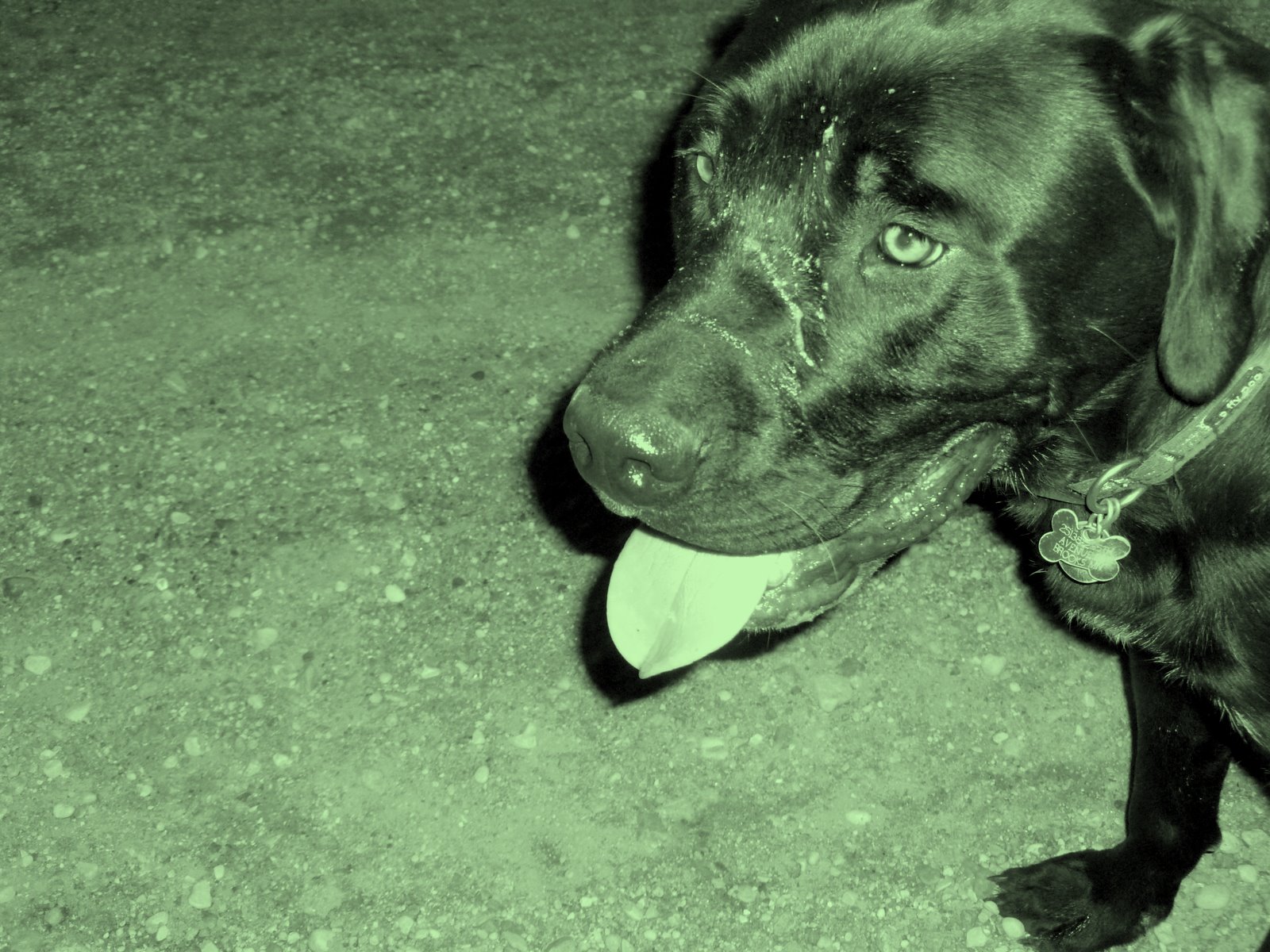
Harry the Dog has just taken a direct hit from the skunk and is trying to rub off the tear-inducing spray on the loose gravel.

It's enough to make a dog feel green! My secret to removing the smell of a skunk is time. Sherry, who has a keen nose, didn't even detect the smell on Harry the Dog when he came in the kitchen just 24-hours later. I wonder if his water-repellent, naturally-oily coat helps. With my border collies three days was sufficient --- so save the tomato juice --- the smell will dissipate on its own.

Posted by Picasa

Monday, October 4, 2010

Scout the Ox, a Growing Steer

Scout the Ox, a Bull Calf, 
 the day he rode home on Amy's lap in the cab of the pickup: 13 days of age,
November 5th, 2009

Scout the Ox, a Steer 
 and Amy 10 months later: 10 1/2 months of age, September 15, 2010
Where'd those horns come from?
Posted by Picasa

Friday, September 24, 2010

Oxen Pull Stone in Vermont Quarry


Eight oxen pull a block of marble from a Vermont quarry. The two in the rear may be acting as brakes for the wagon, or they could be resting. The article in Century Magazine, 1890, is colorfully written and an enjoyable read. Here is a quote: Passing close beside a deliberate ox-team and its bawling driver comes a puffing locomotive, tugging its long train of cars up the track among the towering piles of un-hewn marble. Side by side work the old and the new, each performing better than the other could its proper task.


The oxen enter the damp, dim stone-sawing mill, the machinery growls and hisses as it gnaws the stone like some monstrous beast in its den over its prey, and hardly another sound is heard. The lusty outdoor bawl of the ox-teamster sinks here to the pervading growl, and the whistle of his lash attunes itself to the swish of the saws.

Thanks to the work of an excellent website about stone structures in the northeastern United States, the complete article is available for your enjoyment, here: http://www.stonestructures.org/html/marble_hills_vermont.html


Posted by Picasa

A Comfy Spot for a Kitten on a Rainy Day

Sure beats hanging out under the floor-boards of the granary.
(See four posts on 8/1/2010 for the story of Squeak the Kitten's rescue by Harry the Dog.)
Posted by Picasa

Sophia the Cat Gets a New Name

 
Alas, our two orphan kittens are both tomcats. So Sophia the Cat is now called Soapy; the kitten is still Squeak. Here they are --- hanging out.

The other day Squeak was missing. I called Harry the Dog and he came from the barn with a look of guilty-pleasure on his face. I found Squeak in a cubbyhole about five feet up on the barn wall, where he had no doubt escaped to, when I called off the dog. Peaches the Pony was checking him out.

Harry likes to pick up the cats and drag them around like stuffed animals. 
Posted by Picasa

Harry the Dog Vies for Attention


Hyper-exuberance!
Ayrshire ox and Newfoundland x Pit Bull Terrier dog
Posted by Picasa

Harry the Dog Fetches the Pop


case
"Bring me a can^of pop please."

Posted by Picasa

Wednesday, September 22, 2010

Curious Bit of Animal Behavior

Newfoundland x Pit Bull Dog;
Claiming His Territory?

Since we brought Harry the Dog home as a puppy on a cold, sub-zero December 4, 2009, the majority of his time has been divided between being a willing house dog or a reluctant pasture dog. So much did he prefer the house that we had to bribe him with treats, or put him on a leash, to get him to the pasture (where we can shut him in).

On one occasion, recently, he lay down in protest and it took two of us to drag him by his legs all the way to the pasture. He’s getting to be a big boy! And he seems to think all this tussling is great fun.

Then, overnight, everything changed; Harry reversed his preferences. He still comes to the house when called. But, when he gets inside he’s antsy and into every kind of trouble he can think of until we put him out again. I was in the practice of giving him a rawhide-chew when I’m on the computer. He’d lie here under the table, and devour that while I typed. Now, as soon as he gets his square of rawhide he goes right to the door and asks to go out. Once out, he heads to the pasture and to his friends, Scout the Ox, and Peaches the Pony. He voluntarily stays out there with only short, occasional visits to the house-yard and doorstep.

I could go on-and-on about possible reasons he might change his behavior over time — but, the remarkable thing here is that it was a sudden one-eighty. Did he consider all his reasons and then make some kind of a conscious decision? Something like, “Starting today I will spend most of my time in the pasture because. . . .”

Can dogs even do this kind of reasoning and decision making?

 Click on "comments" just below and tell me what you think? Or share an experience you've had with your dog.

storybrookeripples

Tuesday, September 14, 2010

How To Convert a Garden Cart into a Small Wagon to Pull With a Single Ox


Cart for Single Ox: You can easily convert a garden cart into a small wagon to pull with a growing, single ox. This would also work well as a second use for a riding steer. The cart works excellently for training, and now I have some real uses for that hay-burner in the barn.

The video demonstrates the conversion I did on our cart, using parts I had around the shop. It also shows a way to eliminate the chance of the ox getting a leg tangled in, or abraded by, a trace-chain.

Documentary: The Red River Cart


Here's a 2 minute, made for TV documentary on The Red River Cart. It gives a Canadian and Metis perspective on the history of the cart. The video reminds us that The Red River Cart "stands as one of many glorious achievements of the Metis people."
Published on YouTube by APTNDigitalNations along with sixty-two other videos with titles like Tea Dolls, Tipis, York Boats, Kamiks, and Sled Dogs; produced by FootPrints Aboriginal Expressions; featuring Rachelle White Wind, and Andrew Clark; narrated by Doug Bedard, and written by Lorre Jenson. View APTNDigitalNations videos here: http://www.youtube.com/user/APTNDigitalNations

Saturday, September 11, 2010

Ostby’s Sesquicentennial Ox Cart Journey

Detail of Orlin Ostby's Ox Cart on Display
at the
2010 Western Minnesota Steam Thresher's Reunion

In the nineteenth century what is known locally as the Pembina Trail* was the main artery for heavily laden carts traveling the 450 mile-plus distance from Pembina, North Dakota to present day St. Paul, Minnesota. The hundreds of wood-and-rawhide carts waggled through Indian territory on the unimproved trail; the cart axles squealed notoriously under their loads of buffalo-hide and furs. Prior to the early 1820's, the carts were pulled by horses; after cattle were introduced**, the carts were more often pulled by oxen. The tough, mosquito-swatting cart drivers were typically Metis.***

In 1958, Delmar Hagen, of Northwestern Minnesota, followed the Pembina trail with an ox and cart, in celebration of Minnesota’s Centennial.

In celebration of Minnesota’s Sesquicentennial in 2008, Orlin Ostby (who worked for Delmar Hagen as a teen) traveled the distance with his ox Pum. Orlin was accompanied by family and friends. An account of the Ostby’s journey, with numerous photos, is online at http://www.pembinatrail.blogspot.com/


*More specifically, the Woods Trail, part of the network of Red River Ox Cart Trails.
**Under the tutelage of Lord Selkirk, Scottish colonists began arriving in 1812. The first cattle arrived in 1815. For more history see
http://storybrookeripples.blogspot.com/2010/08/from-where-hails-red-river-ox.html
***Métis is pronounced mey-tees, or mey-tee. They were the offspring of European fur-traders and native Americans. By 1820 French explorers and fur traders had already been in the region for a-hundred-years.
Posted by Picasa

Monday, September 6, 2010

Ostby's Oxen Pum and Kin Plowing at Western Minnesota Steam Thresher's Reunion, Rollag, Minnesota


Pum and Kin on the Way to the Field


Orlin Ostby Oversees the Plowing


Don't worry boys. . . .you had half-a-days work done,
before they got all those harnesses untangled.


Christopher Guides the Team

Posted by Picasa

Turning the Sod


Throwing Their Shoulders into the Yoke


The Plowman Works as Hard as the Ox


Job Well Done!

Posted by Picasa